
Students Explore Nature and Science at Jax State Plant Pressing Party

Jacksonville State University’s S.E.E.D.S. Ecology Club hosts a plant pressing party, highlighting the herabarium collection.
Courtesy of Jax State
JACKSONVILLE — Jacksonville State University’s Strategies for Ecology Education, Diversity and Sustainability Ecology Club — which shortens to the S.E.E.D.S Ecology Club — hosted a plant pressing party March 13 at Martin Hall.
The club partnered with the curator of Jax State’s herbarium, Jimmy Triplett, Ph.D., who took participants on a tour of the facility so that everyone could view the university's collection of plants; the collection contains specimens from both Alabama and the larger world.
After the tour, Triplett demonstrated the process of plant pressing.
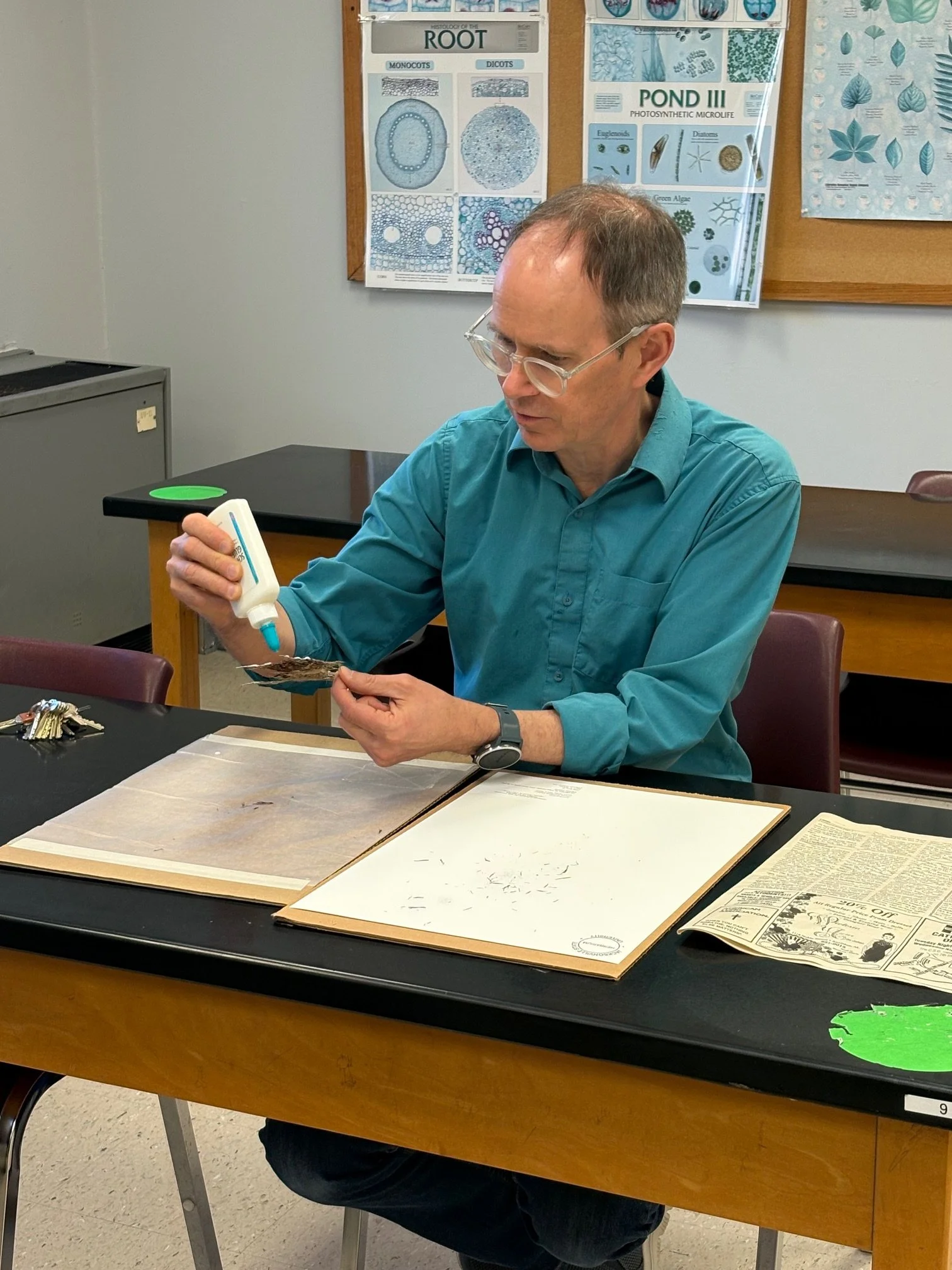
Jimmy Triplett, Jax State herbarium curator, guides participants through the plant pressing process.
Photo by Taylor Smith, The Anniston Star
Plant pressing is a method used to preserve a specimen as a record that the plant existed, according to Triplett, and employs a process that uses ordinary supplies such as cardstock paper, glue, wax paper, and cardboard.
Triplett applied glue to the leaves and stems, explaining that some plants are harder to glue on paper, as they are fragile. As small pieces of the plant fell off, he explained that they are usually preserved for accurate identification of the plant, but only in rare plants.
“If there’s something really interesting about the plant, we would put the pieces into an envelope next to the label,” Triplett said.
He advised the participants to use toothpicks and forceps to apply and stick stems to the glue. After the plant was glued to the cardstock, a label was added to identify the plant and covered with wax paper for protection.
“It’s a good way of documenting. They are safe, more or less forever,” Triplett said.
The plants that the participants worked on were part of the Hayes Jackson “Flora of St. Clair County” collection. Jackson, an Alabama Cooperative Extension System Urban Extension Agent and Longleaf Botanical Gardens Liaison at the Anniston Museums and Gardens, wrote about the collection for his thesis while completing his masters at Jax State, according to Triplett.
The collection contained 1,348 specimens, according to Triplett.
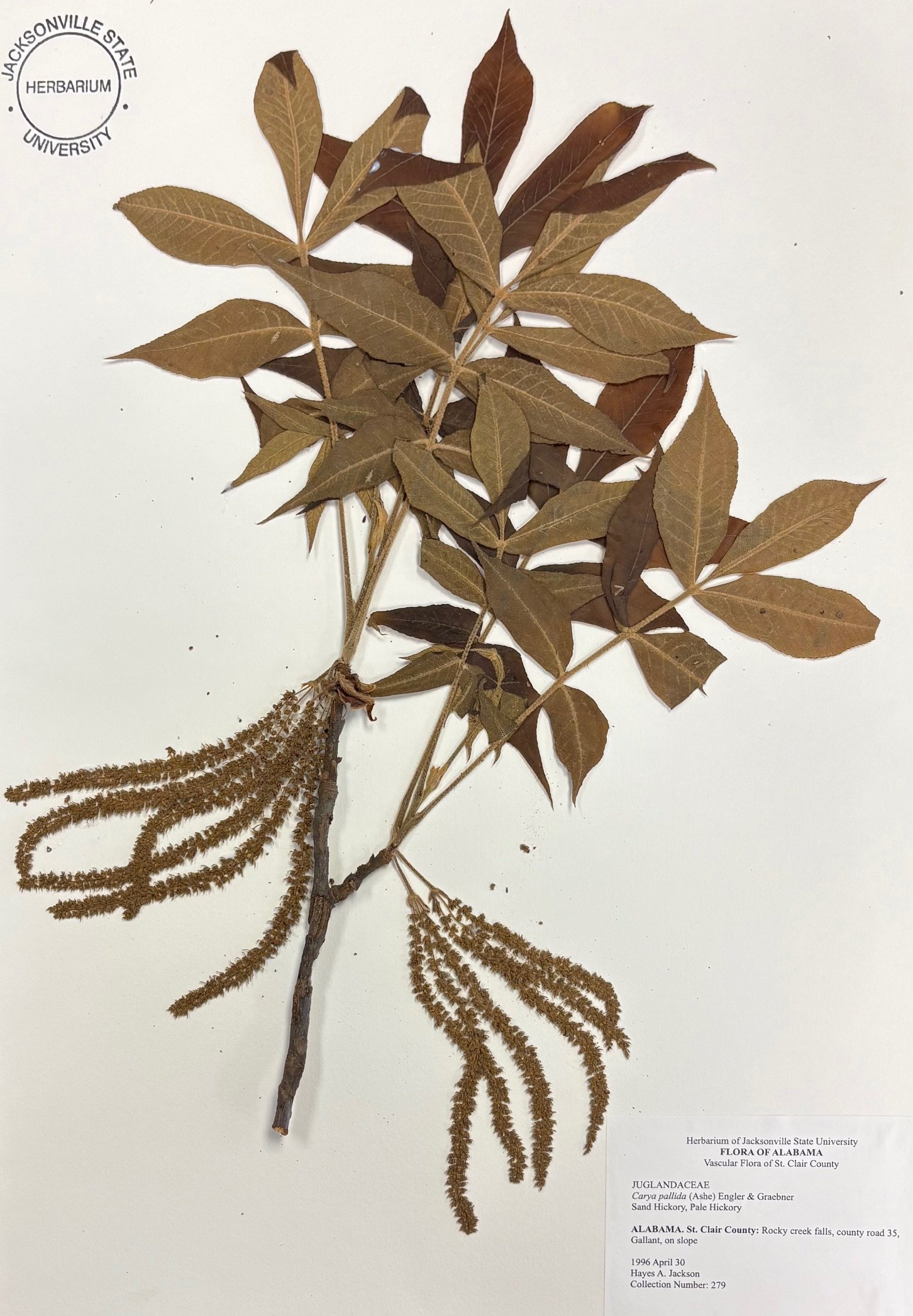
A Sand Hickory plant is mounted and added to Jax State’s herbarium.
Photo by Taylor Smith, The Anniston Star
Jackson collected voucher specimens, which serve as physical proof of his findings and allow others to examine them. The plants were kept in newspapers before they were pressed to keep them safe, according to Triplett.
“We collect in newspapers but we don’t want them to stay in there forever because it’s not archival,” Triplett said.
As participants began to work, Triplett walked around and helped with placement, identification and preservation of the plants. Participants worked fast, saying the event was relaxing. They mounted approximately 60 specimens, helping Jax State’s herbarium document Jackson’s St. Clair County collection, according to Triplett.
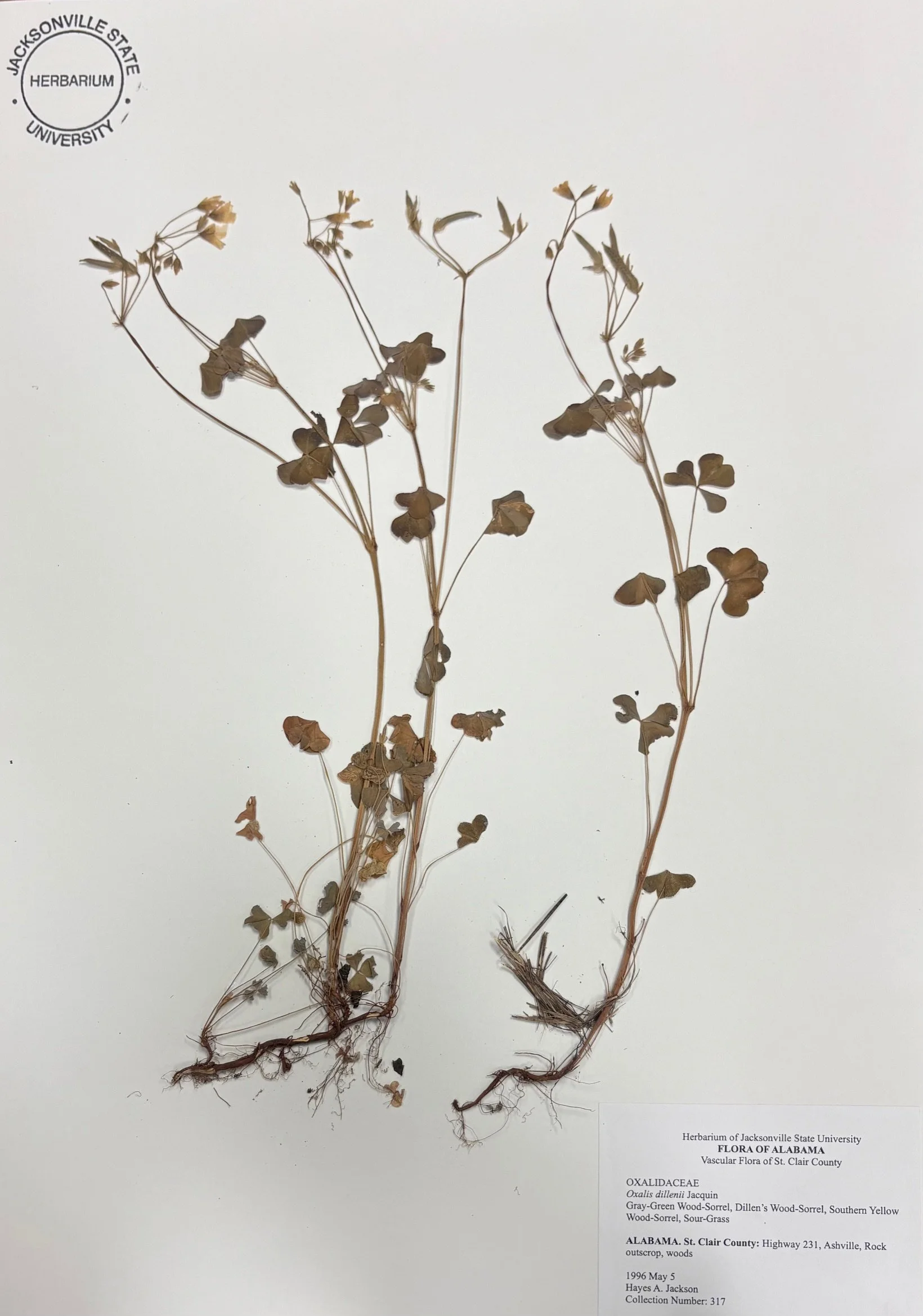
A Southern Yellow Wood-Sorrel plant is mounted and added to Jax State’s herbarium.
Photo by Taylor Smith, The Anniston Star
The S.E.E.D.S Ecology Club is a part of a national organization from the Ecology Society of America, and has a chapter at Jax State. Sarah Burger, president of the S.E.E.D.S Ecology Club, said the club provides accessible and engaging science for everyone, including those outside of Jax State and non-science majors.
“Our main goal is to provide some fun activities, like this one, that get people intrigued without having to do a full research project, or be a student,” Burger said.
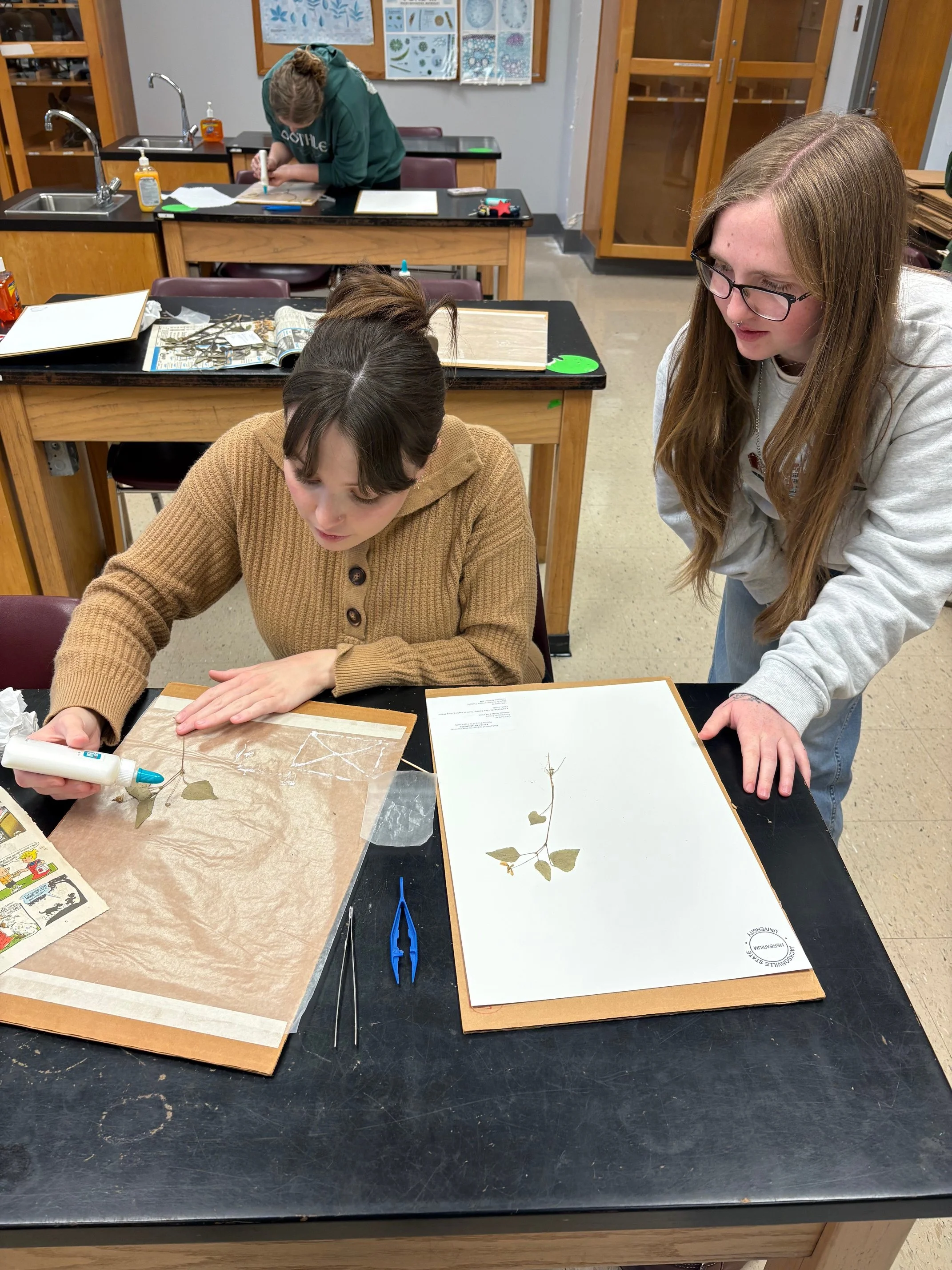
Jacksonville State student Alia Wilson applies glue to her specimen while Sarah Burger offers guidance.
Photo by Taylor Smith, The Anniston Star