
171 Pinwheels Planted in Anniston to Raise Awareness for Child Abuse Prevention
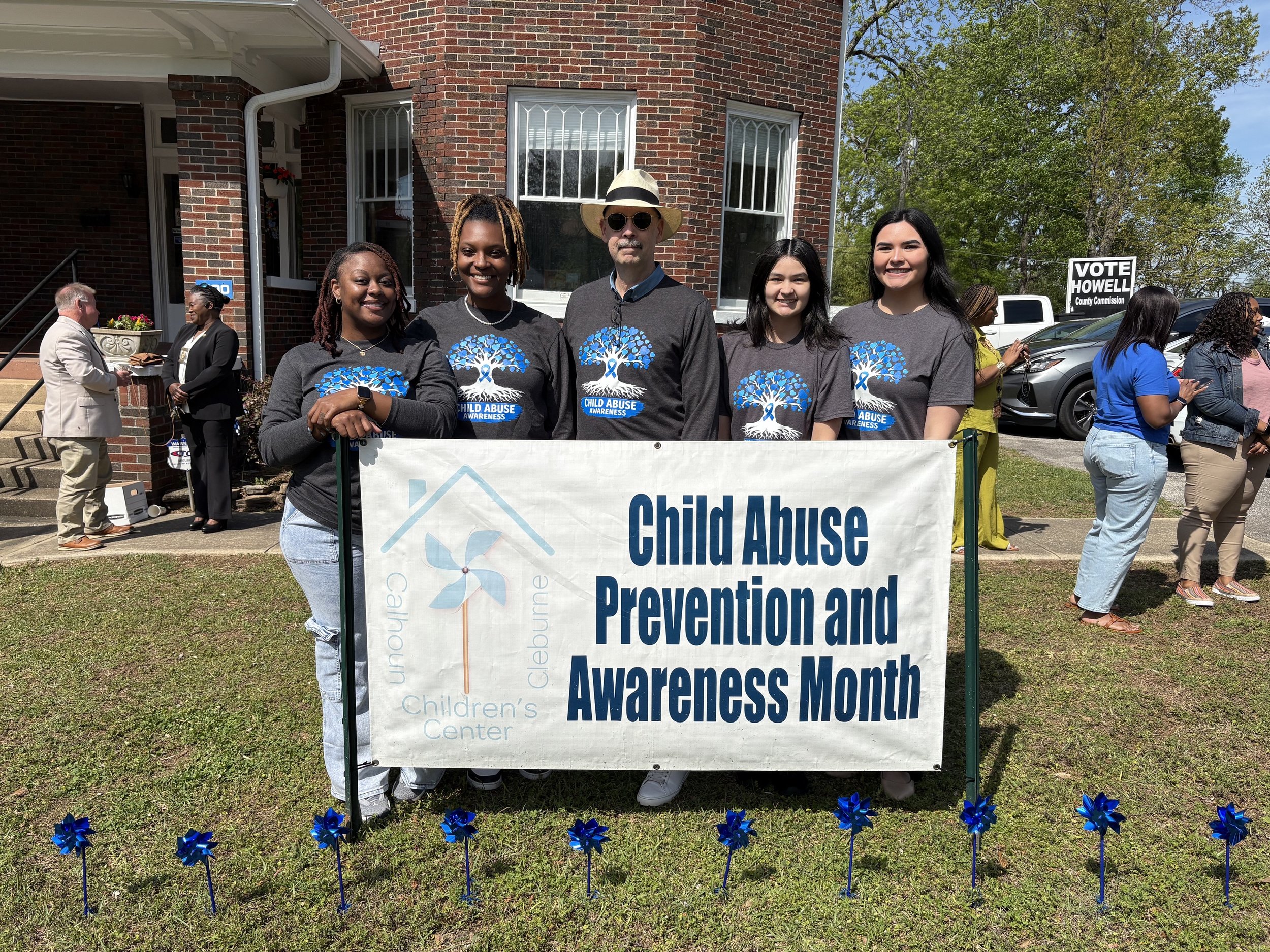
Calhoun Cleburne Children's Center staff provides 171 pinwheels for participants to plant. From left: Marnisha Cook, case manager, forensic interviewer and family advocate; Jasmine Stearns, office manager; Andy Beavers, executive director; Kenzie Schaffer, case manager; and Morgan Schaffer, therapist and forensic interviewer.
Photo by Taylor Smith, The Anniston Star
ANNISTON — The Calhoun Cleburne Children’s Center hosted its annual pinwheel planting event Wednesday, April 8, outside of its building at 2100 Leighton Ave.
Pinwheels and Purpose is dedicated to National Child Abuse Prevention Month, according to forensic interviewer and therapist Morgan Schaffer. The pinwheels, the national symbol for child abuse prevention, represent the number of forensic interviews done the prior year. A total of 171 pinwheels were planted at this year’s event.
Executive Director Andy Beavers began the planting ceremony by thanking the individuals who played a part in helping the children heal, including law enforcement officers, staff of the Alabama Department of Human Resources, United Way of East Central Alabama and Calhoun County Commissioner Terry Howell.
“In a perfect world, I’d like to see us out of business. We know that’s not going to happen, so we’re going to continue to do the work to help our victims recover from their trauma,” Beavers said.
The Calhoun Cleburne Children’s Center aims to reduce the trauma for abused children and their families by offering a safe, child-friendly space with supportive services through their path to healing and justice, according to their mission statement. The center works with the Office of the District Attorney, Department of Human Resources and local law enforcement agencies to conduct forensic interviews for victims of child abuse. There are separate forensic interviews for each allegation, if there is more than one case being investigated, according to Schaffer.
The center serves children ages 3 to 17 who are involved in allegations of physical or sexual abuse, neglect, trafficking, kidnapping, domestic violence and drug use in the home. The forensic interview is designed to gather information that minimizes additional harm to the child, according to Schaffer.
“The interviews are recorded so the child does not have to constantly disclose their story. If an investigator or caseworker can’t make the interview, they are able to watch a copy of the video,” Schaffer said.
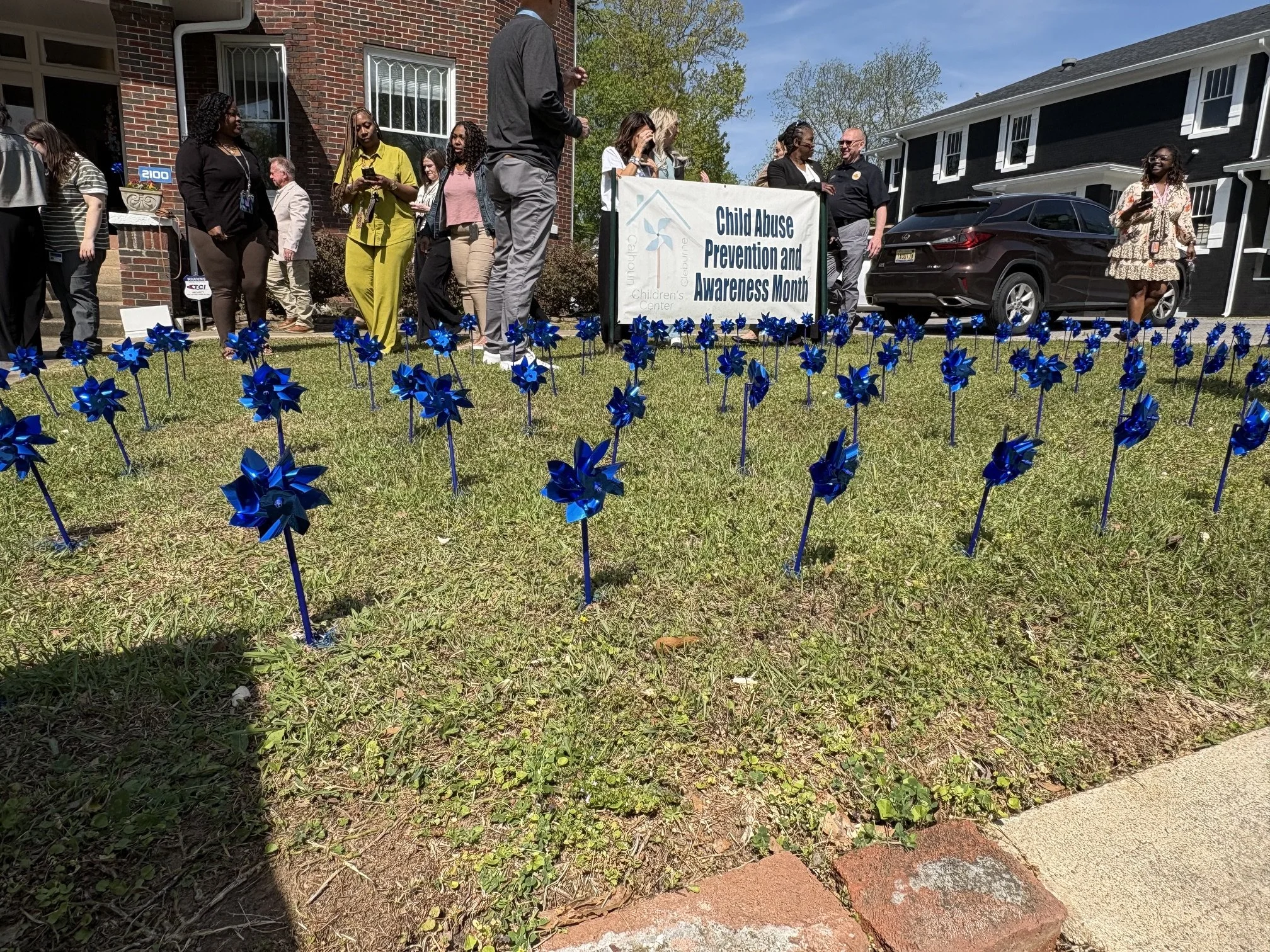
One hundread and seventy-one pinwheels are planted at the Calhoun Cleburne Children’s Center to represent the number of forensic interviews conducted last year.
Photo by Taylor Smith, The Anniston Star